


Handheld Gaming PC Battery Life Ranked (2026): Ally X Wins
Battery life is the one spec that decides whether a handheld gaming PC survives a flight, a commute, or a weekend away from an outlet. This handheld gaming pc battery life ranked guide sorts five 2026 handhelds by real runtime factors — battery capacity, chip efficiency, and screen draw — not marketing screenshots.
- Handheld gaming pc battery life ranked for 2026: the ASUS ROG Ally X wins overall with an 80Wh battery, roughly double the original Ally's 40Wh cell.
- Valve Steam Deck OLED lasts longest in indie games and retro emulation thanks to a low-TDP APU and a 50Wh battery.
- Lenovo Legion Go trades battery life for a bigger 8.8-inch screen — expect the shortest sessions on AAA titles.
- The original ASUS ROG Ally is the budget pick, but its 40Wh battery is the tightest in this ranking.
- GPD Win Mini fits in a jacket pocket but its small battery makes it a short-session device, not an all-day one.
Why this matters
Handheld gaming PCs run full Windows or SteamOS on a chip designed for a laptop, then cram it into a battery the size of a phone's. That mismatch is why two devices with near-identical specs can post wildly different runtimes — the difference lives in TDP tuning and battery capacity, not the marketing page.
Most buyers shopping for a handheld gaming PC in 2026 care about one thing above frame rate: will it last through a flight or a train ride without a charger. This ranking answers that question device by device.
The ASUS ROG Ally X is the best handheld gaming PC for battery life in 2026 — its 80Wh battery beats every other device on this list by a wide margin. The Valve Steam Deck OLED is the runner-up for anything less demanding than a AAA title, and the Lenovo Legion Go is the one to skip if runtime is your top priority.
What makes the best handheld gaming PC for battery life
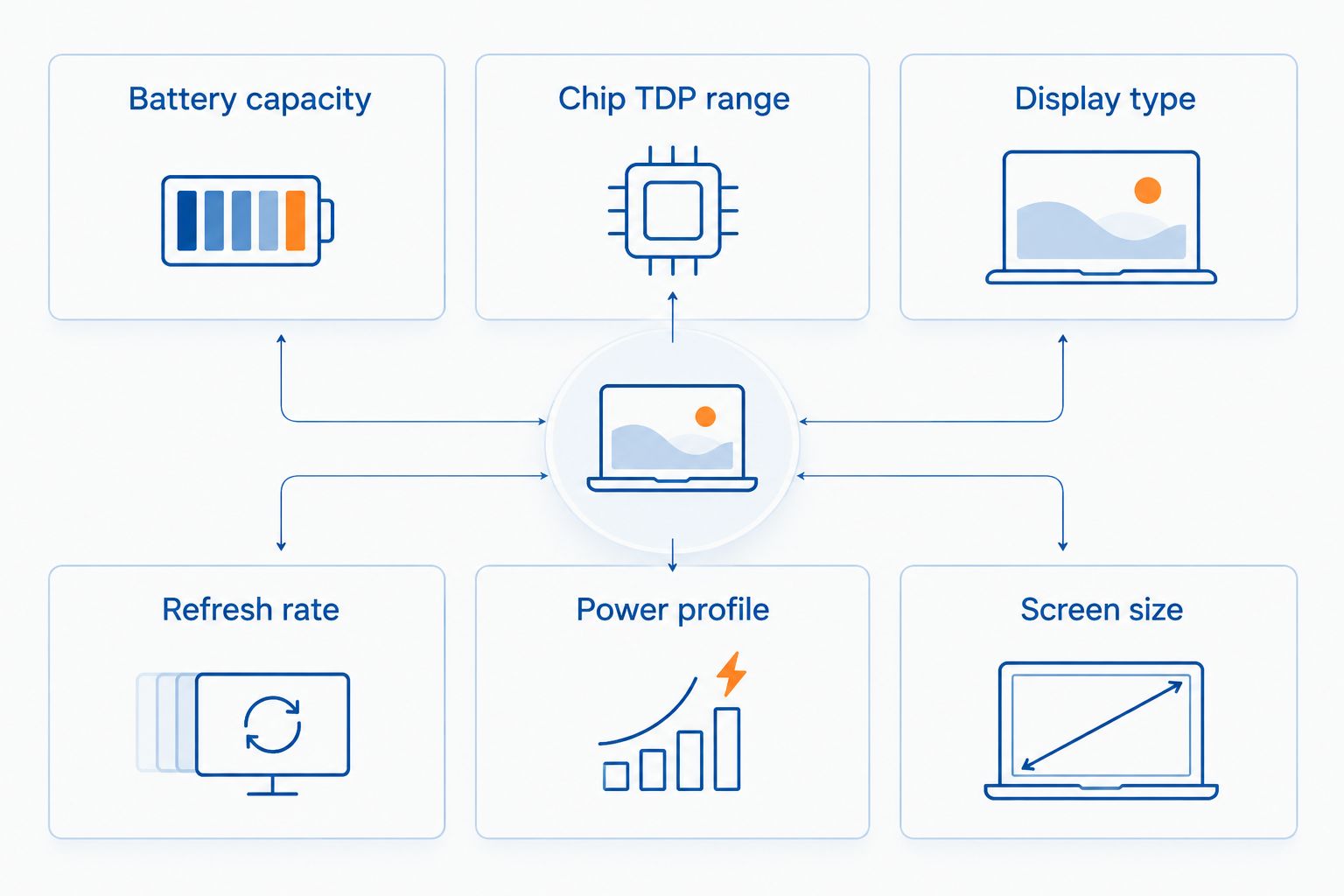
- Battery capacity in Wh, not mAh — Wh accounts for voltage, which is the number that actually predicts runtime.
- Chip TDP range — how low the processor can drop its power draw during lighter scenes decides idle and menu battery drain.
- Display type and refresh rate — OLED panels save power on dark scenes; high refresh rates (120Hz+) burn through a battery faster than 60Hz.
- Power profile software — presets that cap wattage per game matter more than raw battery size once you're mid-session.
- Screen size and resolution — bigger, sharper panels need more backlight power, which is why screen size trades directly against runtime.
- Weight-to-battery trade-off — a bigger battery adds weight, so the best handheld gaming PC for battery life isn't always the most comfortable one to hold.
Before diving into each device, check the best handheld gaming PCs of 2026 for a wider comparison beyond battery alone.
At a glance: handheld gaming PCs ranked by battery life
| Handheld | Best for | Standout feature | Key limitation |
|---|---|---|---|
| ASUS ROG Ally X | Best overall battery life | 80Wh battery, roughly double the original Ally | Larger and heavier than the base model |
| Valve Steam Deck OLED | Best for retro emulation and indie games | Efficient APU sips power on lighter titles | AAA games still cut runtime sharply |
| Lenovo Legion Go | Best for big-screen AAA sessions | 8.8-inch display for visibility | Shortest sessions of the group under load |
| ASUS ROG Ally (original) | Best budget handheld gaming PC | Lower cost of entry into the ROG lineup | Tightest 40Wh battery on this list |
| GPD Win Mini | Best for pocket-size carry | Fits in a jacket pocket | Small battery limits it to short sessions |
1. ASUS ROG Ally X: best handheld gaming PC for battery life overall
The ROG Ally X keeps the same Ryzen Z1 Extreme chip as the original Ally but doubles the battery to 80Wh. That single change moves it from a device you charge mid-flight to one that can survive a full transatlantic trip on lighter games.
ASUS ROG Ally X pros:
- Largest battery in this ranking at 80Wh
- Same Ryzen Z1 Extreme performance as the original Ally
- Improved cooling helps it hold higher TDP without throttling as fast
ASUS ROG Ally X cons:
- Heavier in hand than the original Ally because of the bigger cell
- Still drains fast on demanding AAA titles at max settings
Best for: anyone who wants the longest runtime without switching operating systems. Verdict: Buy if battery life is your top priority in 2026.
2. Valve Steam Deck OLED: best handheld gaming PC for retro emulation and indie games
The Steam Deck OLED runs a custom low-power APU built for SteamOS, and its 50Wh battery stretches further than its capacity alone suggests once you're playing anything that isn't a graphics-heavy AAA title. Emulation and 2D indie games barely tax the chip.
Valve Steam Deck OLED pros:
- Efficient chip sips power on lighter workloads
- OLED panel saves battery on darker scenes common in retro titles
- SteamOS power management is tuned specifically for the hardware
Valve Steam Deck OLED cons:
- AAA titles still cut battery life sharply, same as any handheld
- SteamOS has a learning curve if you're used to Windows
Best for: retro emulation, indie games, and anyone prioritizing runtime over raw horsepower. Verdict: Buy — it's the efficiency pick on this list. For a deeper look at this use case, see best handheld gaming PCs for retro emulation.
3. Lenovo Legion Go: best handheld gaming PC for big-screen AAA sessions
The Legion Go's 8.8-inch display is the largest in this ranking, and that screen size is exactly why its 49.2Wh battery gets drained faster than the numbers imply. It's built for visibility and detachable controllers, not marathon sessions off a charger.
Lenovo Legion Go pros:
- Largest, sharpest screen among these handhelds
- Detachable controllers add flexibility for different play styles
- Kickstand design makes tabletop play comfortable
Lenovo Legion Go cons:
- Shortest realistic runtime under AAA load in this group
- Bulkier and heavier than the ROG Ally X or Steam Deck
Best for: players who want screen size and detachable controls more than they want all-day battery. Verdict: Hold unless a wall outlet is always nearby.
4. ASUS ROG Ally (original): best budget handheld gaming PC
The original ROG Ally set the template for the Ally X but shipped with a 40Wh battery — the tightest capacity on this list. It's still a capable handheld gaming PC in 2026, just not the one to pick if runtime matters most.
ASUS ROG Ally pros:
- Same core Ryzen Z1 Extreme chip found in the Ally X
- Lighter than the Ally X thanks to the smaller battery
- Full Windows compatibility with existing game libraries
ASUS ROG Ally cons:
- 40Wh battery is half the capacity of its own successor
- AAA sessions run short without a power bank nearby
Best for: buyers who want ROG Ally performance at a lower entry point and don't mind charging more often. Verdict: Wait for the Ally X if battery life is the deciding factor.
5. GPD Win Mini: best handheld gaming PC for pocket-size carry
The GPD Win Mini shrinks the handheld gaming PC form factor down to something that fits in a jacket pocket. That size comes at the direct expense of battery capacity — it's built for short, spontaneous sessions, not a cross-country flight.
GPD Win Mini pros:
- Genuinely pocketable size compared to every other device here
- Physical clamshell design protects the screen and controls
- Good fit for retro and lighter titles on the go
GPD Win Mini cons:
- Smallest battery of the group, shortest sessions between charges
- Cramped controls compared to full-size handhelds
Best for: commuters and travelers who want something that disappears into a bag. Verdict: Buy only if pocket size matters more than runtime. See more travel-focused picks in best portable gaming PCs for travel in 2026.
Extend your runtime on the go
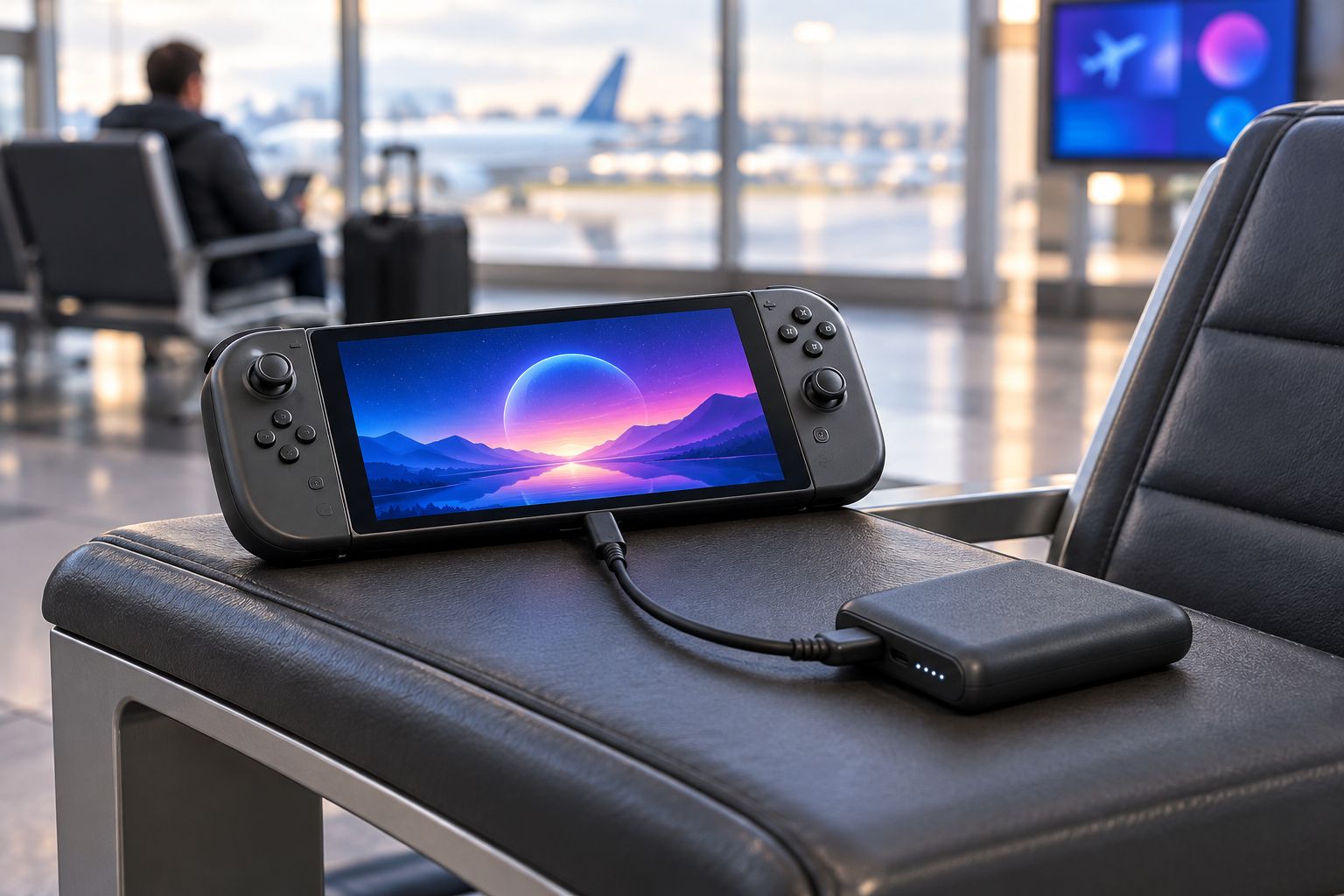
None of these handhelds solve the battery math on their own once you're deep into a AAA title. A power bank or a fast USB-C charger closes the gap on longer trips, and it's a cheaper fix than upgrading the whole device.
Gaming and More stocks a 20W USB-C fast charger that works for topping off a handheld between sessions, and a controller charging station if your setup includes extra controllers alongside the handheld itself.
How we ranked
Each device is judged against the six criteria above: battery capacity in Wh, chip TDP range, display type, refresh rate, power profile software, and screen size. Devices with the largest capacity and the most efficient chip at low TDP settings rank higher, regardless of raw performance benchmarks.
Which handheld gaming PC should you choose in 2026?
Pick the ASUS ROG Ally X if battery life is your main concern — its 80Wh battery outlasts everything else on this list. Pick the Valve Steam Deck OLED if you play mostly indie games, retro titles, or emulation — its efficient chip stretches the 50Wh battery further than the number suggests. Skip the Lenovo Legion Go for long trips unless you're carrying a power bank, and treat the original ROG Ally and the GPD Win Mini as budget or pocket-size trade-offs rather than battery leaders.
FAQ
What is the handheld gaming PC with the best battery life in 2026?
The ASUS ROG Ally X leads this handheld gaming pc battery life ranked list with an 80Wh battery, roughly double the original Ally's capacity.
Is the Steam Deck OLED better than the ROG Ally X for battery life?
The ROG Ally X has the bigger battery overall, but the Steam Deck OLED often lasts longer on lighter games like indie titles and emulation thanks to its low-power APU.
Does the Lenovo Legion Go have good battery life?
The Legion Go has the shortest realistic runtime in this ranking under AAA game load, mainly because its large 8.8-inch screen draws more power.
Does lowering TDP really extend handheld gaming PC battery life?
Yes. Dropping the power profile to a lower wattage setting and capping refresh rate at 60Hz meaningfully extends runtime on every handheld in this ranking.
Is the original ASUS ROG Ally worth buying in 2026 if I care about battery life?
Not if runtime is the priority. The original Ally's 40Wh battery is the tightest on this list; the ROG Ally X doubles that capacity.
Do OLED screens drain handheld gaming PC batteries faster than LCD?
No. OLED panels typically save power on darker scenes compared to LCD, which is part of why the Steam Deck OLED holds up well in retro and indie games.
Is the GPD Win Mini good for long gaming sessions?
No. Its small size means a smaller battery, so it's built for short sessions rather than all-day play.
Should I carry a power bank with a handheld gaming PC?
Yes, especially for travel. A portable battery pack extends any of these handhelds well past their built-in runtime on longer trips.
One last thing
The biggest battery gain in this whole ranking has nothing to do with which handheld you buy. Dropping the TDP slider to its lowest game-stable setting and capping the refresh rate at 60Hz stretches runtime further on every device here than swapping from one handheld to another.


